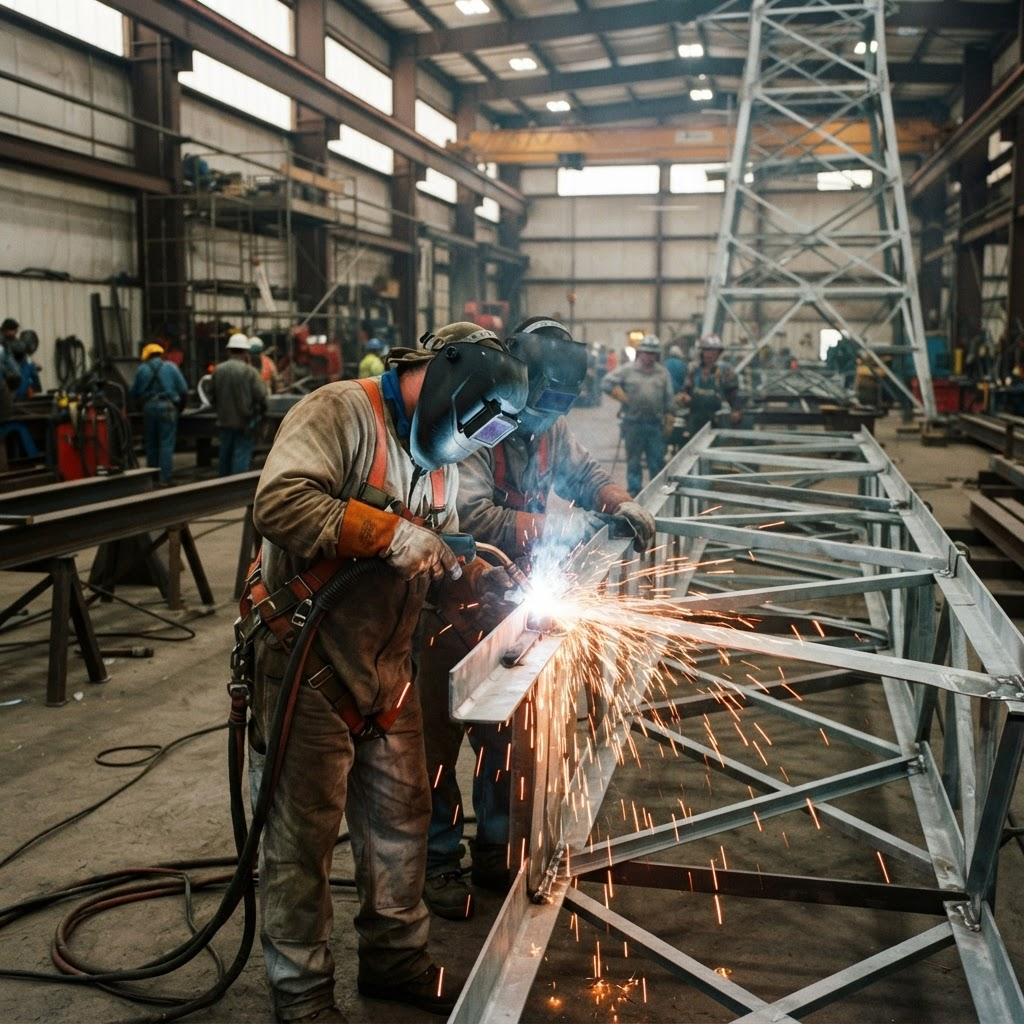
Walk onto the business floor of a growing manufacturing company and you will usually see one of two things. In the first scenario, there are visible signs of stress: the production manager is chasing a missing raw material, sales is emailing the warehouse because their spreadsheet is outdated, and accounting is waiting on paper invoices to close the month. In the second, the floor is calm — a screen displays real-time production variance, the warehouse reordered material three days ago because the system predicted a demand spike, and financials update as goods ship. The difference is not the quality of the people; it is the connected system running underneath.
What ERP systems actually do
Most definitions of ERP are technical and talk about integrated suites and databases, but for a decision-maker, an ERP system is really an operational bridge. At its core, it eliminates the handover gap between departments — in a non-ERP business, when sales closes a deal, they have to tell production, production has to tell procurement to buy materials, and procurement has to tell finance to pay the vendor. Every one of those handoffs is a chance for error, delay, or miscommunication, and an ERP automates them.
Three practical things ERP eliminates
It kills the swivel-chair problem of switching between a CRM, an accounting tool, and spreadsheets to complete one task — when a customer places an order, the system checks stock, sets up production automatically, orders missing material, and prepares the invoice in real time, with no manual follow-up and no jumping between tools.
It also acts like a time machine for inventory. Managing stock in spreadsheets means looking in the rear-view mirror, since you only know what you had when you last counted. An ERP gives available-to-promise visibility: current stock minus what is already allocated to pending orders, plus incoming stock from suppliers, telling you exactly what you can sell today. And it enforces process discipline — in small businesses, processes live in people's heads, but an ERP hard-codes these workflows so the business runs independently of any one individual being available.
Why every growing business eventually needs one
A modest revenue business can survive on spreadsheets for a while. A much larger one will choke on them, because as product lines and complexity increase, the difficulty does not grow at the same steady pace — it grows exponentially. If your finance team takes more than five days to close the monthly books, your current systems are likely already acting as a brake on growth rather than a support for it.
- Businesses moving from manual tracking to a connected ERP report a substantial drop in carrying costs by buying just-in-time rather than just-in-case
- Inventory accuracy commonly moves from the 60-70 percent range typical of spreadsheets to near-perfect once tracked through an ERP
- Linking production planning to material availability materially improves on-time delivery performance
The modules that matter most for manufacturers
Not every ERP is built the same, and generic systems often fail in manufacturing because they lack the depth complex production requires. Advanced production planning needs to handle a multi-level bill of materials — a custom machine needing a motor, which needs a casing, which needs steel — breaking that structure into parts, checking stock for each item, and scheduling machine time accordingly.
Supply chain and procurement modules should rate vendors automatically, flagging when a supplier is regularly delivering late so the business can switch on urgent orders without waiting for someone to notice the pattern manually. And for regulated industries, quality control and compliance tracking lot and batch numbers from raw material entry to finished goods exit means a recall can identify exactly which customers received an affected batch in seconds rather than days.
How to choose the right system
Selecting an ERP is high-stakes, and a failed implementation can cost more than money — it can stall operations. Do not let a vendor show a generic slide deck; give them your own data and ask them to simulate your production cycle. If they cannot handle a complex bill of materials or a mid-production change order during the demo, they will not handle it once you are live.
In most cases today, the debate between cloud and traditional ERP is largely settled in favour of cloud for small and mid-sized businesses, given the lower upfront cost and automatic updates — unless a business has highly specific security requirements. And look for partners who offer genuine post-implementation support, since the real work starts after go-live and that ongoing relationship is often what determines whether a team actually adopts the tools.
Where Bolto fits
Bolto gives UAE businesses one connected operating layer for finance, sales, purchasing, inventory, production, people, and reporting. The goal is not to add complexity; it is to make the right operational information available to the people who need it, when they need it.
 fits your business